
A newly completed home can look ready to move into while areas such as the roof or water tank remain difficult to see from the ground. Signs of moisture can also need closer investigation. For homeowners in Johor Bahru and Kulai, knowing how an inspector approaches these areas helps you understand what your defect inspection covers.
EC Defect Inspection uses a thermal scanner and a moisture meter during new-home inspections. For landed properties, we use a drone to photograph roof tiles and the water tank area. Our inspector also goes up to check the water tank area when the property's layout and safe access allow it. The findings are documented in a report with photographs, the affected area and a short description.
Thermal scanning: identifying areas that need a closer look
A thermal scanner displays differences in surface temperature. When an inspector is looking at an area of concern, a thermal image can help identify a temperature difference that deserves further attention. This gives the inspector another view of a surface alongside what is visible to the eye.
A temperature difference does not, by itself, prove that a leak exists. Sunlight, airflow and surface materials can affect what the scanner shows. The image needs to be considered together with the conditions on site and other observations.
For a homeowner, the value is a more informed inspection: an unusual area can be looked at more closely and relevant findings can be documented. A thermal scan is not a guarantee that every concealed defect will be found.
Moisture meter: checking suspected damp or leaks
EC uses a moisture meter when investigating suspected moisture or leakage. A reading gives the inspector additional information about an area of concern, alongside the thermal image and a visual check where relevant.
The inspector still needs to interpret the reading in context. A moisture reading alone may not identify where water entered, how long an issue has existed or what repair is needed. If the cause is unclear, further investigation may be necessary.
For example, if a homeowner notices a stain below a window, the inspector can examine the wall, use a thermal scanner to look for temperature differences and check the area with a moisture meter. If there is a finding to report, the location, photo and a short description can be included in the defect report for the developer.
Drone roof inspection: a closer view of landed properties
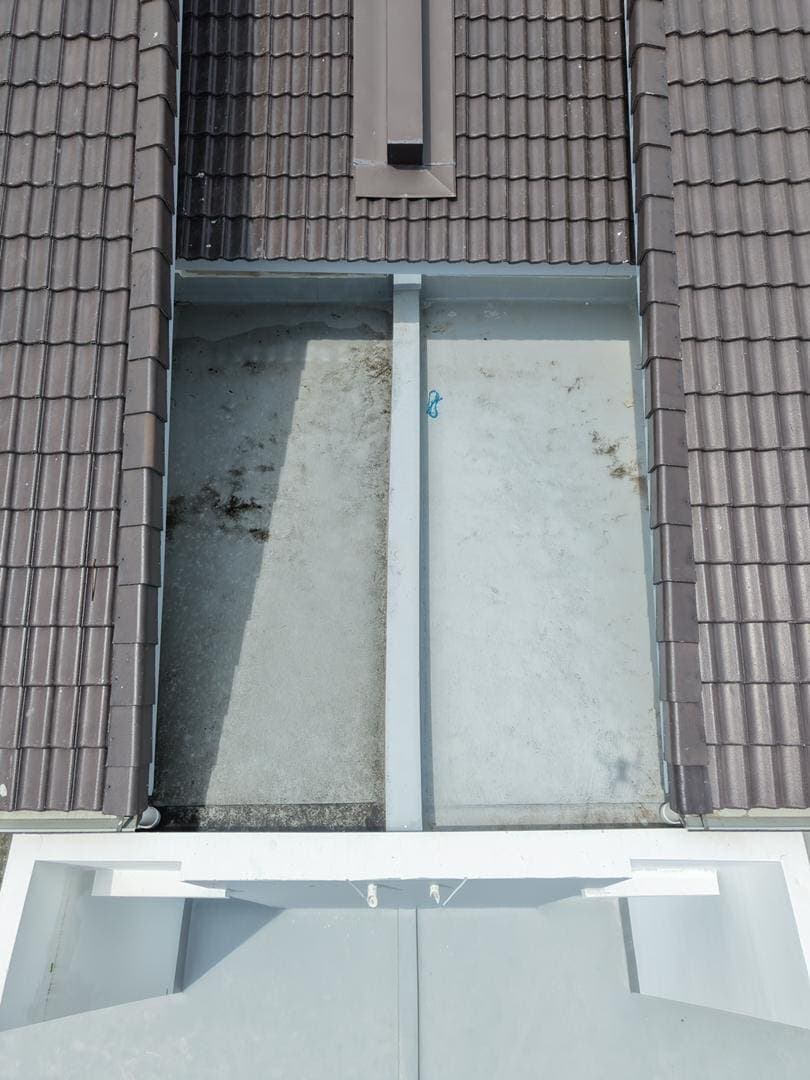
For landed homes, EC uses a drone to photograph the roof, including roof tiles and the water tank area. Aerial photographs give the inspector and homeowner a view of parts of the property that are difficult to see from ground level.
This is particularly useful when a homeowner wants to understand the visible condition of the roof after key collection. The photographs can help document observations and show where an issue was seen.
The view depends on the property's layout and conditions on the day. A drone records what its camera can see; concealed areas and every part of the roof cannot necessarily be assessed from aerial images alone.
Water tank area: an in-person check where access allows
For landed homes, EC's inspector generally goes up to the water tank area to check it in person when the house layout allows safe access. The drone also photographs this area from above, giving the team an additional view of the roof and tank area.
Not every house has the same access. If the area cannot be reached safely, the inspector cannot carry out the same in-person check. Homeowners can share their property details before booking and ask the team about the expected scope.
The inspector's role: using tools and recording findings
Equipment is useful when its results are considered carefully. EC's inspection brings together the available views and readings with the inspector's observations on site. Where a finding is recorded, the report includes a photograph, the affected area and a short description.
EC's senior inspectors hold the CIDB QLASSIC CIS 7 Practitioner qualification. QLASSIC (Quality Assessment System in Construction) is a system for assessing the quality of building construction workmanship against the CIS 7 standard. It provides a structured framework for evaluating workmanship across building elements. You can learn more about the system from CIDB Malaysia.
That background supports our senior inspectors' understanding of workmanship assessment and complements the practical tools used during an EC defect inspection.
EC assists customers with submitting their defect report according to the relevant developer's process. A clear record helps the homeowner communicate what was observed and where, while the developer reviews the submitted items.
Questions homeowners often ask
Can a thermal scanner confirm a water leak?
A thermal scanner shows temperature differences that can help identify an area for closer inspection. A thermal image alone does not confirm a leak or its source; the inspector considers site conditions and other observations, including moisture meter readings where relevant.
Does EC use a moisture meter during defect inspections?
Yes. EC uses a moisture meter for moisture and suspected leak checks during new-home inspections. The reading is considered alongside the inspector's observations and does not by itself establish the source of a leak.
Does EC use a drone for landed-house roof inspections?
Yes. EC uses a drone to photograph the roof of landed properties, including roof tiles and the water tank area. The views available depend on the property and conditions on the day.
Will the inspector go up to the water tank area?
The inspector generally checks the water tank area in person for landed homes when the property layout and safe access allow it. Ask EC about the scope if your property has unusual or restricted access.
Ask about your new home
If you've received the keys to a new home in Johor Bahru, Kulai or the surrounding area, share your property type with us. We'll explain the inspection scope and answer questions about roof access, moisture checks and your developer's submission process.
Questions about your new home? Tell us your property type and we will explain the inspection scope.
WhatsApp us to book your inspection →For more, read our new-home defect checklist and Johor Bahru defect inspection guide. Learn more about QLASSIC from CIDB Malaysia.